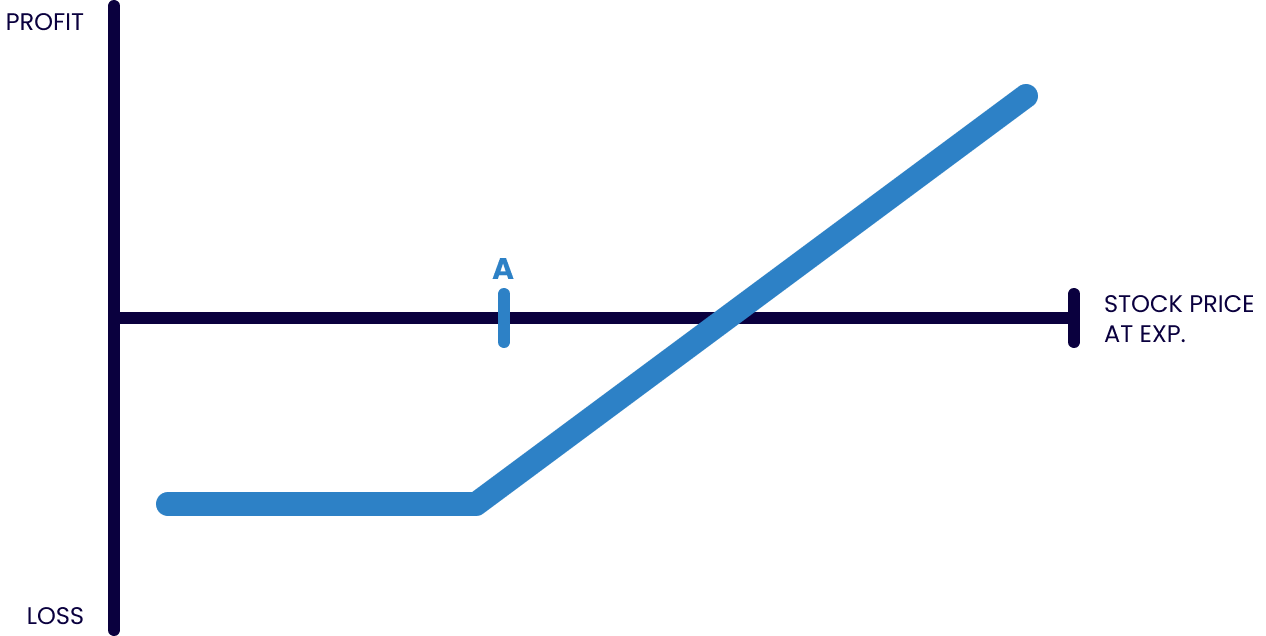
The simple textbook definition is a buyer of a Call option has the right (but not the obligation) to buy a specified quantity of a security at a specified price (strike price) within a fixed period of time (expiration date).
In theory, outright call buying has unlimited upside with limited downside. I say “unlimited in theory” because securities do not go to infinity, but it can sure feel that way if you sold calls and the market is rallying.
The downside of a call buyer is limited to the price they paid for that call, commonly called the Premium. A seller of a Call has the exact opposite risk profile as the buyer. The seller collects the premium paid for the Call, but also has that unlimited downside.
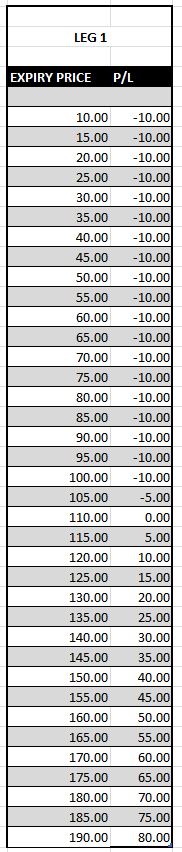
Below is a Profit & loss graph (you will see this a lot in the coming chapters /pages).
Related Posts
WHY OPTIONS?Options limit risk a. An option gives the holder a risk-limiting position in the underlying.…
Long StraddleThe Setup Buy a call, strike price A Buy a put, strike price A Generally,…
PUT OPTIONSThe simple textbook definition is a buyer of a Put option has the right (but…
PUT OPTIONSThe simple textbook definition is a buyer of a Put option has the right (but…
PUT OPTIONSThe simple textbook definition is a buyer of a Put option has the right (but…
PUT OPTIONSThe simple textbook definition is a buyer of a Put option has the right (but…
PUT OPTIONSThe simple textbook definition is a buyer of a Put option has the right (but…
PUT OPTIONSThe simple textbook definition is a buyer of a Put option has the right (but…
PUT OPTIONSThe simple textbook definition is a buyer of a Put option has the right (but…
PUT OPTIONSThe simple textbook definition is a buyer of a Put option has the right (but…
Leave a Reply