A traditional Put Ratio spread is very easy to define, but not quite as easy to understand.
In simple terms, it is just a basic Put Spread with selling an extra Put to help finance the Put Spread. For example: the 125/100 Put 1×2 is Buy the 125 Put once to sell the 100 Put two times.
Below is our Profit & Loss graph
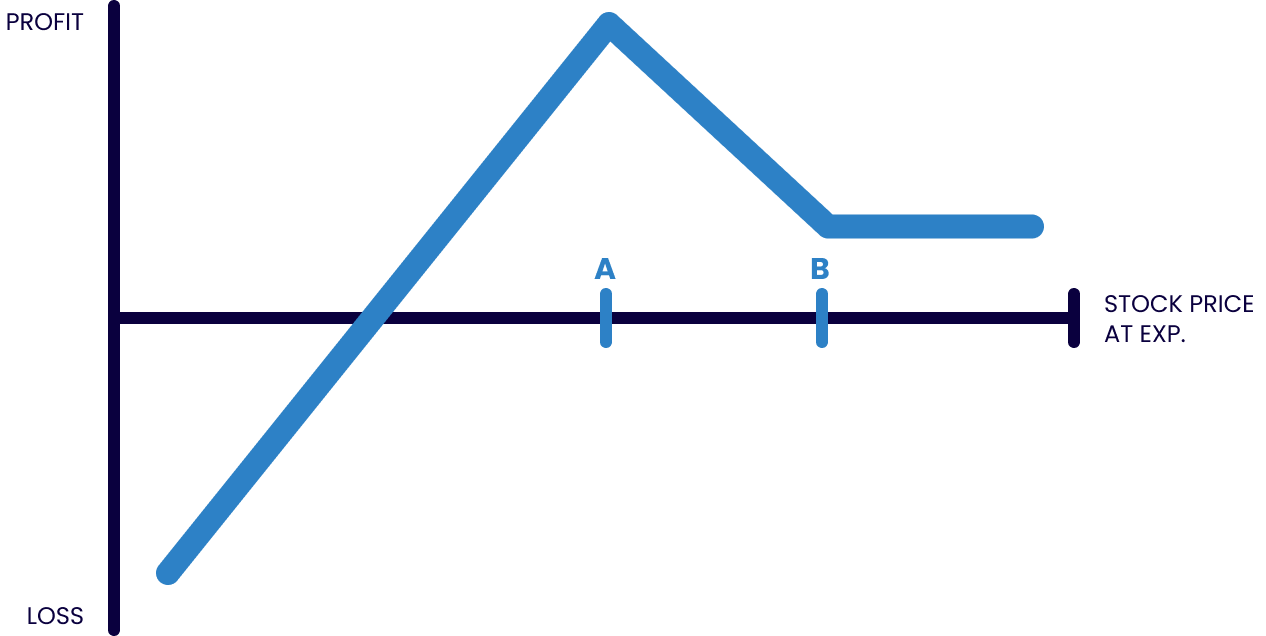
Ideally this trade is put on for a small credit. The Max profit is same as that of a Put Spread, the Strike differential less the premium paid (or collected) for the structure. The loss side is much more difficult to explain because you essentially have two separate trades on. You own a Put Spread and you are short a Put. If you think about the Max loss potential on both trades they are as follows: The long Put Spread max loss is only the premium you paid for the structure, but the max loss for being short a Put is theoretically unlimited ( most markets will not trade below $0, but we saw Crude Oil blow through the $0 boundary). Therefore, in theory, your possible max loss on a 1×2 Put Spread is also unlimited. In order to win on a Put Ratio 1×2, the market needs to grind lower at a slow pace towards your short Strike. If it moves lower too fast, you will feel market to market pain as your 2 short Puts will gain in price more quickly than your 1 long Put.
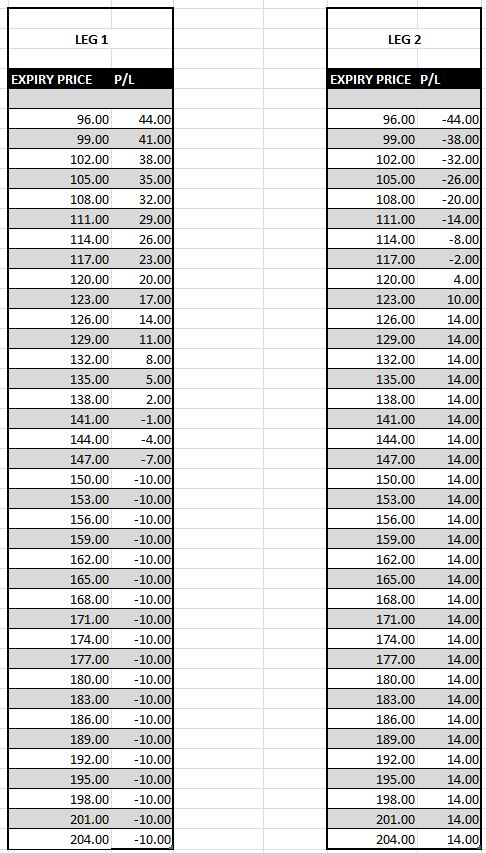
Throughout the learning section I will advise you to manually do an expiration Profit & Loss table. This allows you to visualize exactly what it is that you are doing and is something all beginner traders do to start learning about strategies.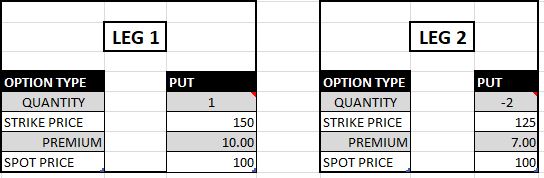
YOU then just need to work out each individual leg profit and loss then net it out in a graph
Ratio Spreads are not meant for inexperienced traders as the risk is too great.
Leave a Reply