This structure can simply be described as tying off the open ended risk involved in a Put Tree.
In the earlier example of the 125/100/75 Put Tree, we would just buy an additional Put below our 2 short 100 and 75 Puts.
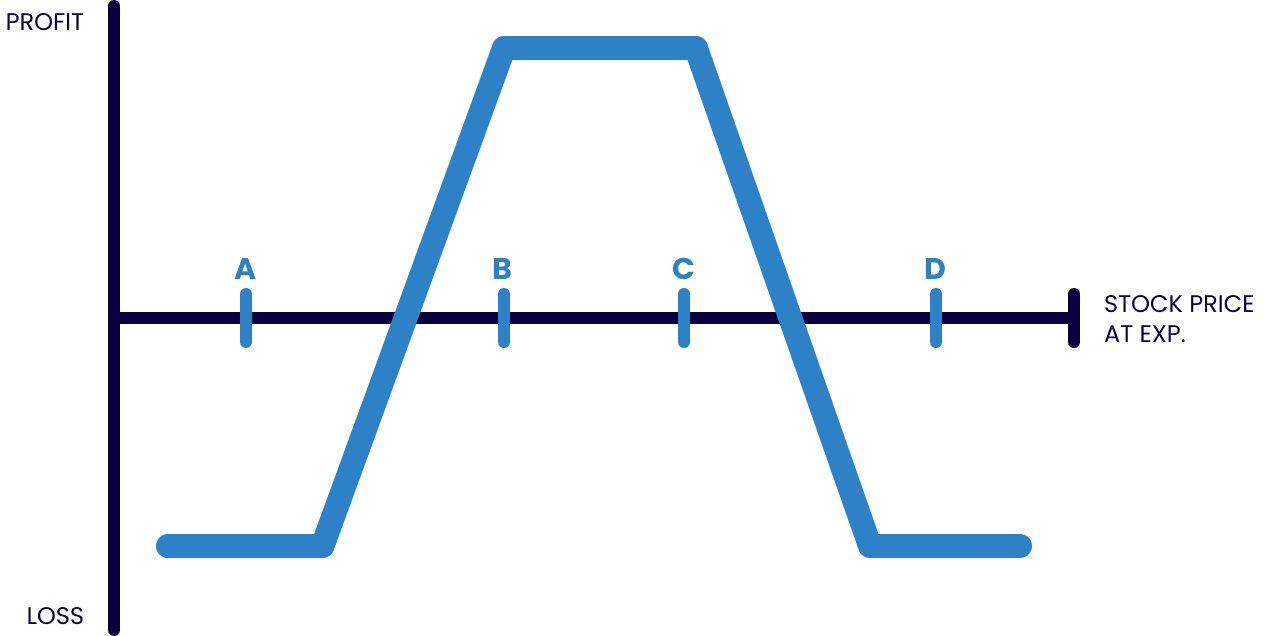
Any strike abelow it would work, but let’s keep it equidistant for discussion and do the 125/100/75/50 Put Condor. The end structure would be long 1x the 125 Put/short 1x the 100 Put/short 1x the 75 Put/ long 1x 50 Put. The Max profit is same as that of a Put spread, the Strike differential less the premium paid for the structure. By adding the lower Put, the Max Loss is now limited to the Premium paid for the Condor.
The great thing about the equidistant Put Condor is it is usually fairly cheap to purchase, albeit more expensive than a Fly due to the wider profitable landing zone. The bad things are that is doesn’t usually pick up in price until expiration nears and it is very hard to pick an exact target price. If you buy a 125/100/75/50 Put Condor for $7, your break evens are 57 to 118. That is a nice wide landing zone, but if the market lands outside of 57 to 118, you start losing your premium paid.
Equidistant Condors are great starter trades
And here is your expiration Profit and Loss graph
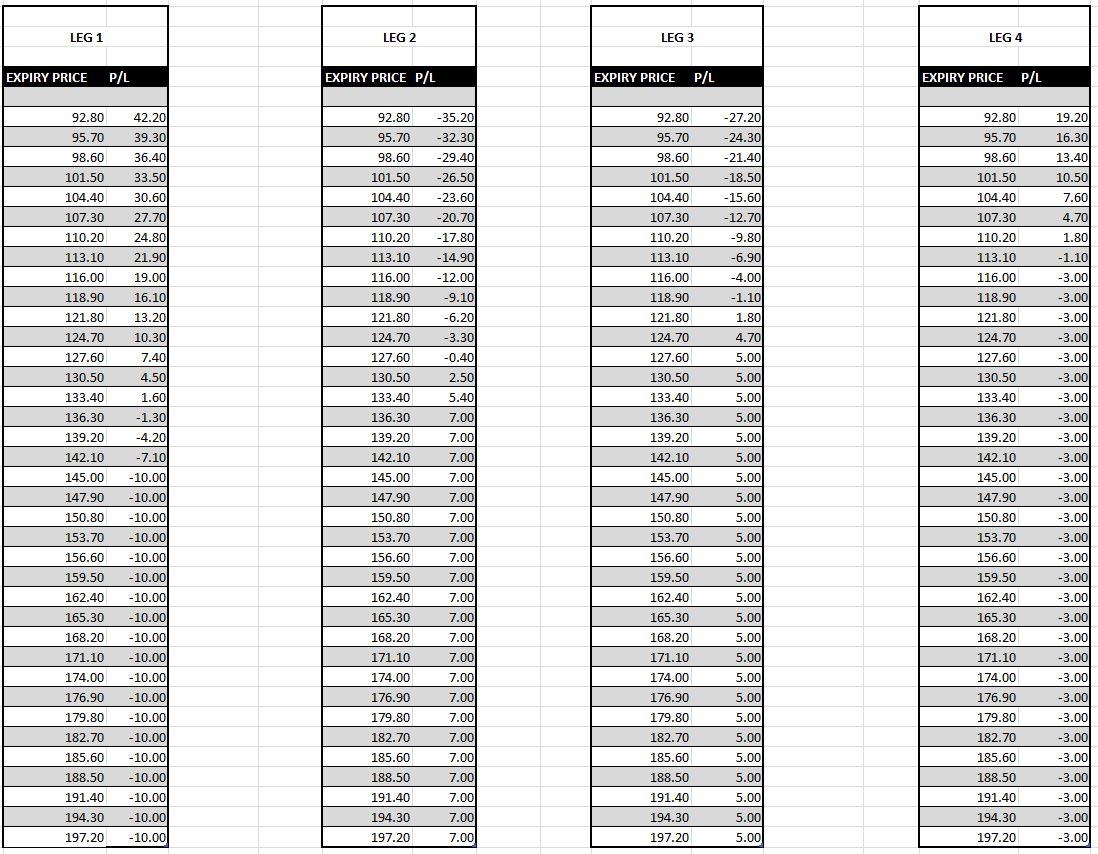
Throughout the learning section I will advise you to manually do an expiration Profit & Loss table. This allows you to visualize exactly what it is that you are doing and is something all beginner traders do to start learning about strategies.

YOU then just need to work out each individual leg profit and loss then net it out in a graph
Leave a Reply