Definition:
A put option is a contract between a buyer and a seller whereby the
buyer acquires the right, but not the obligation, to sell a specified underlying
instrument at a fixed price on or before a fixed date, should the buyer of the put
wish to exercise the option. The seller of the put assumes the obligation of taking
delivery of the instrument should the buyer wish to exercise the option.
A put option gives you the right to sell the underlying asset at a specific
price on or before a specific date. It effectively guarantees a minimum
price at which you can sell a particular future.
When the option is exercised, the holder receives a short underlying
position at the option’s strike price.
A put is effectively a short forward position with insurance.
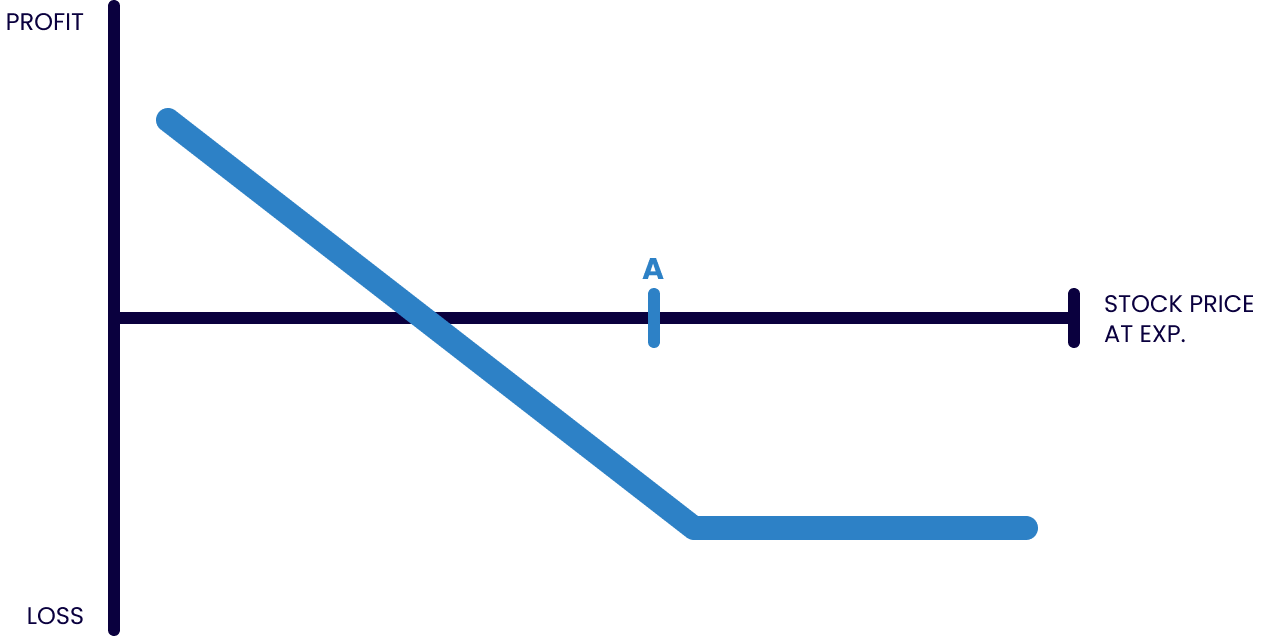
The value of puts normally rise when underlying prices go down.
Should the price of the future increase to above the strike price of your put,
you would not exercise it and your contract would expire worthless. (You would not want to sell the future at a price lower than where it is currently trading.)
LONG PUT
Leave a Reply