Understanding Beta in Options Trading
Beta is a measure of an asset’s volatility in relation to the overall market or a designated benchmark, such as a stock index. It is a key concept in portfolio management and risk analysis, providing insights into how a particular asset moves in relation to the broader market.
Definition and Calculation
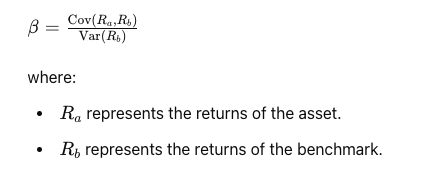
Beta is calculated by comparing the returns of an asset to the returns of the benchmark over a specific period. Mathematically, Beta is the covariance of the asset’s returns with the benchmark’s returns divided by the variance of the benchmark’s returns:
Interpretation of Beta Values
- Beta = 1: The asset’s price moves in tandem with the benchmark. If the benchmark increases by 1%, the asset’s price is also expected to increase by 1%.
- Beta > 1: The asset is more volatile than the benchmark. For example, a Beta of 1.5 suggests that if the benchmark rises by 1%, the asset’s price will rise by 1.5%.
- Beta < 1: The asset is less volatile than the benchmark. For instance, a Beta of 0.5 means the asset will move only 0.5% for every 1% move in the benchmark.
- Beta < 0: The asset moves inversely to the benchmark. A negative Beta indicates that the asset will typically move in the opposite direction to the benchmark.
Application in Portfolio Management
Beta is widely used in portfolio management to assess the risk and volatility of individual securities in comparison to the market:
- Risk Assessment: By knowing an asset’s Beta, investors can gauge its market risk. High Beta stocks are generally more volatile and risky but may offer higher returns. Low Beta stocks are less volatile and considered safer.
- Portfolio Diversification: Investors can use Beta to diversify their portfolios. By including assets with different Beta values, they can balance risk and return.
- Performance Benchmarking: Beta helps in comparing the performance of individual assets against a benchmark, allowing investors to evaluate if an asset’s returns justify its risk.
Beta in Options Trading
While Beta is primarily a stock market concept, it can also be relevant in options trading for managing risk and hedging strategies:
- Hedging: Traders can use Beta to hedge their positions by selecting options that offset the market risk of their portfolio.
- Position Weighting: Beta helps traders weight their options positions relative to market movements, ensuring their strategies align with their risk tolerance and market outlook.
Limitations of Beta
- Historical Data: Beta is based on historical data and may not accurately predict future movements.
- Market Changes: Beta assumes a constant relationship between the asset and the benchmark, which may change over time.
- Not a Comprehensive Measure: Beta only measures market risk and does not account for other risks such as liquidity risk, credit risk, or company-specific factors.
By understanding Beta, investors and traders can better manage their portfolios, align their investment strategies with their risk tolerance, and make more informed decisions in relation to market movements.
Leave a Reply