A Call Tree is very similar to a Call Spread 1×2. The only real difference is instead of having 2 of the higher strike, that strike will be distributed among 2 strikes. For example: the 100/125 Call Spread 1×2 would now be changed to the 100/125/150 Call Tree.
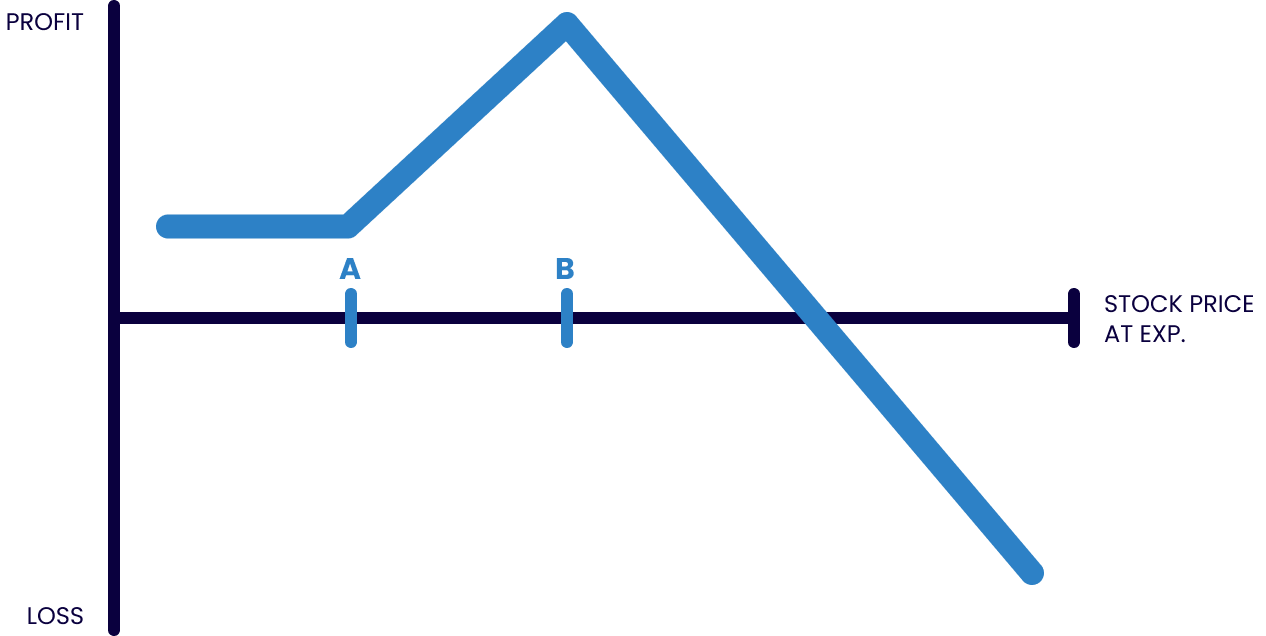
This structure still allows the buyer to cheapen the call spread, however by a lesser amount. It also lessens the risk profile as there is a greater distance to reach the short Call Strike. The Max profit is same as that of a Call spread, the Strike differential less the premium paid (or collected) for the structure.
The loss side is much more difficult to explain because you essentially have two separate trades on. You own a Call Spread and you are short a Call. If you think about the Max loss potential on both trades they are as follows:
The long Call spread max loss is only the premium you paid for the structure, but the max loss for being short a Call is unlimited. Therefore, in theory, your possible max loss on a Call Tree is also unlimited. In order to win on a Call Tree, the market needs to grind higher at a slow pace towards your short Strike. If it moves higher too fast, you will feel market to market pain as your 2 short Calls will gain in price more quickly than your 1 long Call.
Call Trees are not meant for inexperienced traders as the risk is too great.
and here is your expiration profit and loss graph;
Throughout the learning section I will advise you to manually do an expiration Profit & Loss table. This allows you to visualize exactly what it is that you are doing and is something all beginner traders do to start learning about strategies.
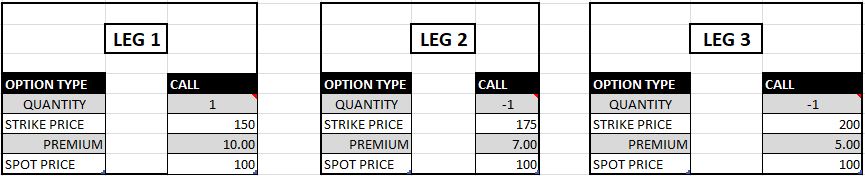
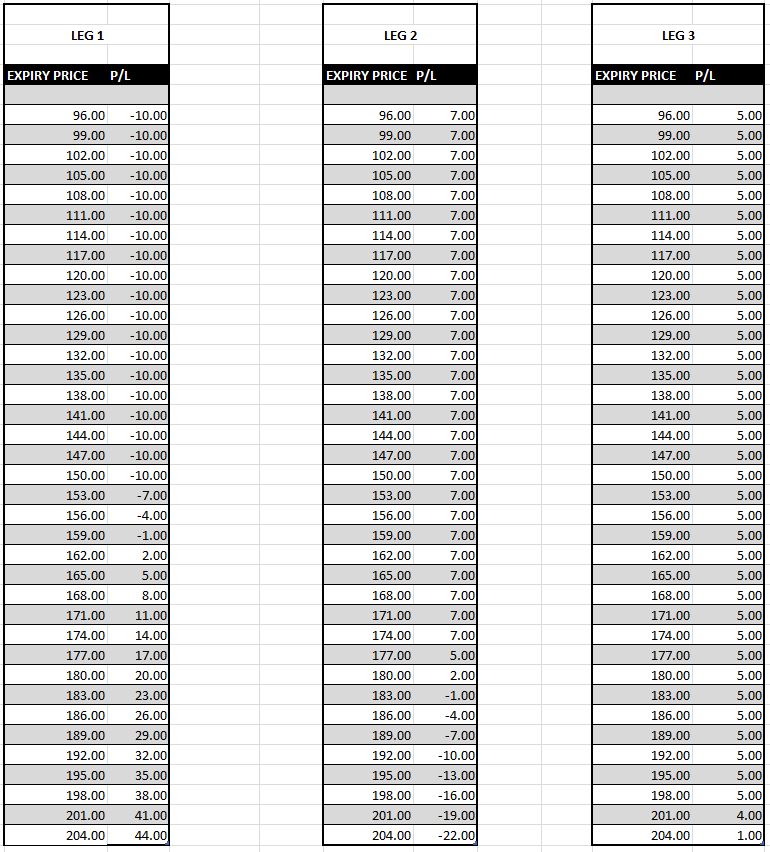
YOU then just need to work out each individual leg profit and loss then net it out in a graph
Leave a Reply