Category: Learning
-
PUT OPTIONS
The simple textbook definition is a buyer of a Put option has the right (but not the obligation) to sell a specified quantity of a security at a specified price (strike price) within a fixed period of time (expiration date). Outright Put buying has almost unlimited upside with limited downside. Securities mostly don’t go below […]
-
CALL OPTIONS
The simple textbook definition is a buyer of a Call option has the right (but not the obligation) to buy a specified quantity of a security at a specified price (strike price) within a fixed period of time (expiration date). In theory, outright call buying has unlimited upside with limited downside. I say “unlimited in […]
-
How AI is Changing the Options Trading Industry
Artificial Intelligence (AI) has been transforming numerous industries for many years, and the financial sector is no exception. In recent times, AI has been actively and effectively employed in the options trading industry to help traders make better, data-driven decisions. In this article, we will explore how AI is changing the options trading industry, from […]
-
The Top 5 Must-Have Tools for Every Options Trader
Options trading can be highly profitable if done correctly, but without the right tools, traders may struggle to achieve success. Whether you’re new to options trading or have years of experience, having the right tools is essential to stay on top of the market and make informed decisions. In this article, we’ll explore the top […]
-
Percentiles & Z-Scores
Z-score The deviation of the value for an individual from the median value of the reference population, divided by the standard Deviation for the reference population Z- Score =(Observed value) – (Median reference value) **Standard deviation of reference population** A fixed Z score interval implies a fixed height or weight difference for children of a […]
-
Gamma
GAMMA I. Definition: An option’s gamma represents the change in its delta in response to an underlying price increase/decrease. The delta is not static and changes as it goes from out-of-the money to in-the-money. The gamma is also known as the delta of the delta Ex: The 100 call has a +.50 delta. The gamma […]
-
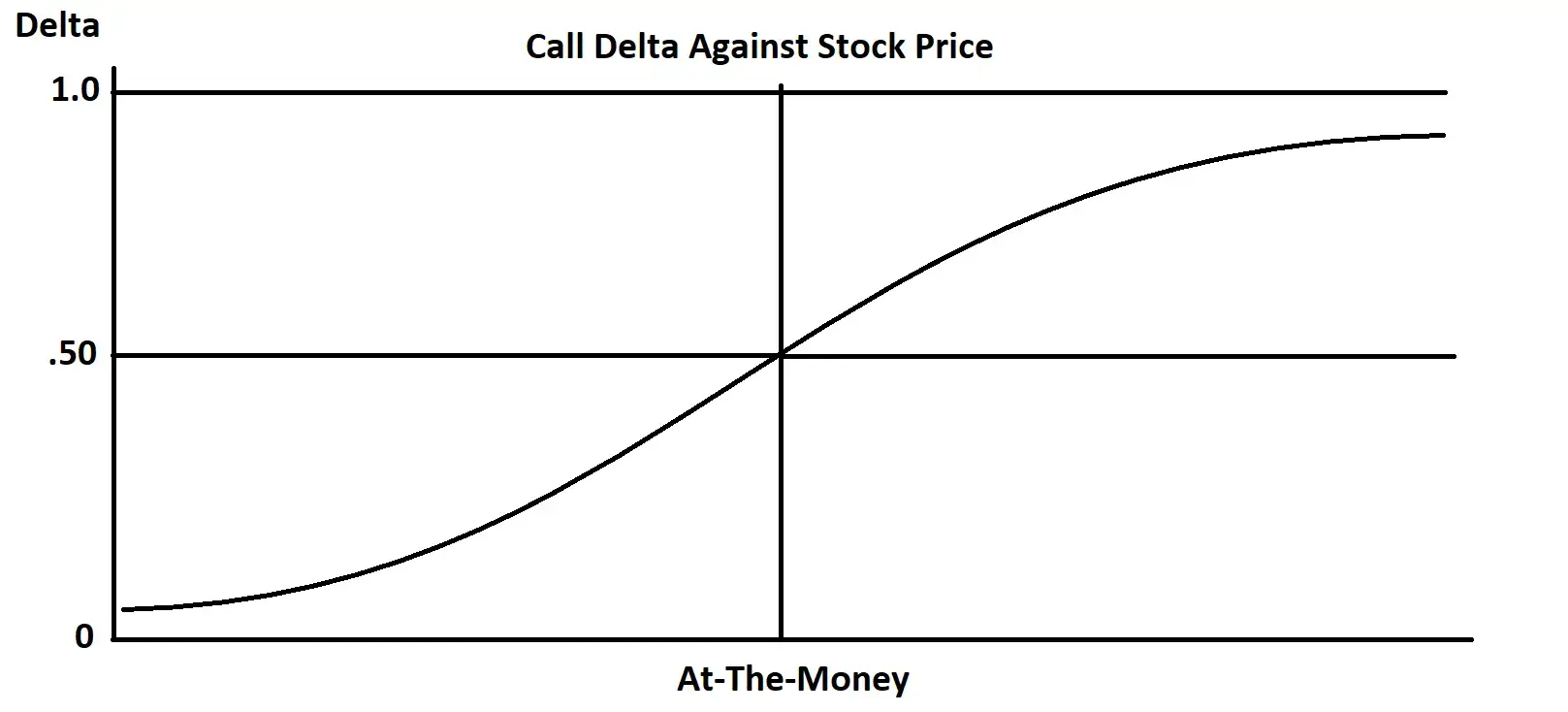
Delta
DELTA Definition: The rate of change in the theoretical value of an option over a one-point change in underlying price. Expressed as a percentage, it can also be interpreted as the equivalent amount of underlying that an option represents, or hedge ratio. Calls have positive deltas, puts have negative deltas. –The Delta has various interpretations: […]
-
CONVERSIONS & REVERSALS
Conversions and Reversals are the trader’s favorite tool for risk management. It is most accurately described as a quasi-arbitrage that options traders rely on for pricing purposes as well as for its risk management functions. The synthetic relationships that puts and calls have to each other has already beer seen in the previous section. This […]
-
SYNTHETICS
Synthetics: When I first started trading options I used to have a little card written with this on it. Basically it is Two or more trading vehicles packaged together to emulate another pricing vehicle or spread. Because the package involves different components, price is also different, but the risk is the same. So, for example, […]
-
COVERED WRITES
o Most common options strategy in use o Can be used to increase the rate of return of a position o Reduces downside risk by reducing capital tied up o Can be used to sell a position when waiting for a rally 2 possible outcomes: o Underlying is above the strike of the call and […]